You may have noticed that the vast majority of settlements in Newfoundland are along the coast. This is because early settlers were focused almost exclusively on the fishery, and successive colonial governments saw the interior as infertile, barren, and not worth developing. By contrast, the Mi’kmaw, whose primary communities lie on the South and West coasts of the island, knew the interior very well. For centuries, they used bark canoes and skin boats to navigate the island’s waterways, and to this day Mi’kmaq on the island trap, hunt, fish, and gather plants and berries with a mix of traditional and modern methods. This expertise about the natural world and knowledge of the interior saw Mi’kmaw individuals act as guides and surveyors throughout Newfoundland history, including surveying the terrestrial telegraph lines that linked the island of Newfoundland to the mainland and Europe in the late nineteenth and early twentieth centuries. Settlers, too, came to know the interior, using it to obtain firewood, materials for construction, and food.
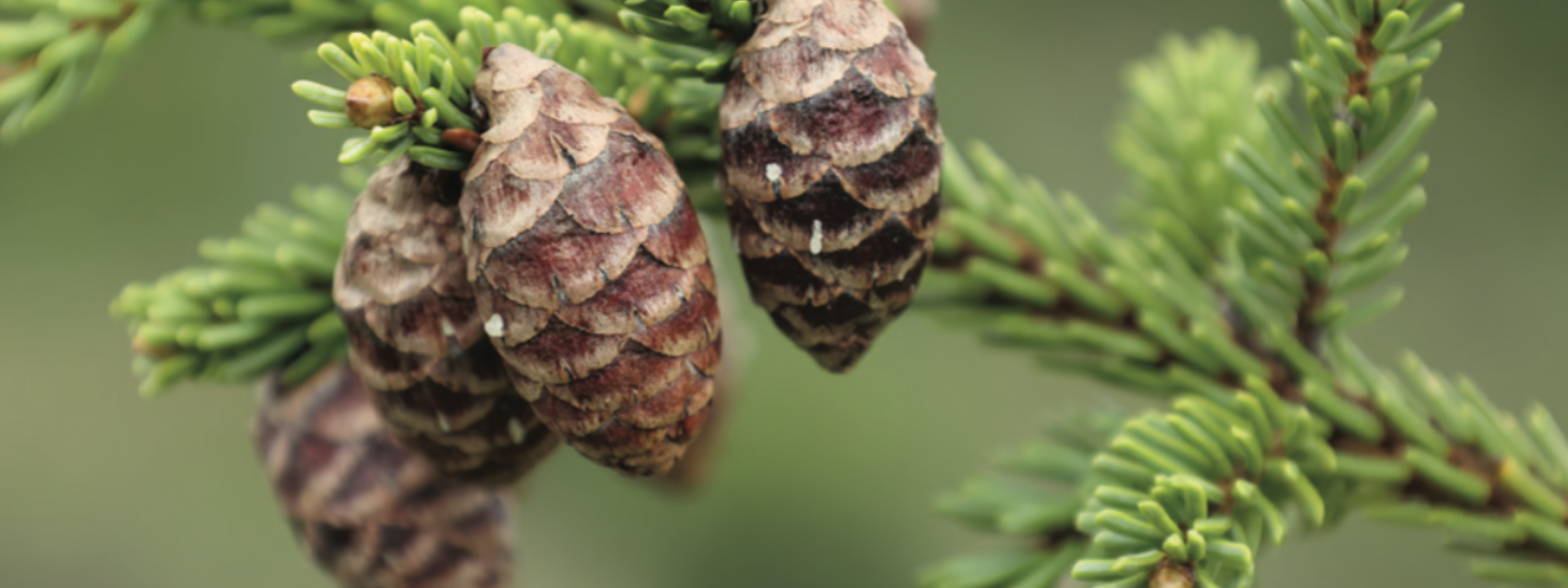
Mi’kmaq in Miawpukek and Qalipu First Nations have worked hard to keep their cultural practices and traditional ecological knowledge alive across generations. This expertise has included gathering a range of important plants of the boreal forest to make a medicine called ‘the seven sorts.’ Seven is a significant number in Mi’kmaw culture, and it emphasizes the importance of acting and being in the world with seven generations of the future in mind. Learn about each plant from Geopark display panels at the site. How many of these plants can you spot on your walk along the trail? And what might thinking seven generations into the future mean to you?
Getting Here
Exit Route 230 at Route 236 turn-off and proceed to Lockston Path Provincial Park. Please note that Route 236 is a 17km dirt road and not all vehicles are suitable for driving the full length. To reduce time spent on Route 236, We recommend entering route 236 from the route 230 turn-off instead of the Route 235 turn-off.
Attractions
Lockston Path Provincial Park
Lockston Path Provincial Park, located just 6 km from Port Rexton on Newfoundland’s Bonavista Peninsula, is a tranquil forested retreat centered around Freshwater Pond. The park offers 57 campsites (including 20 with electricity and water), clean comfort stations with showers and laundry, a sandy freshwater beach, boat launch, playground, and hiking trails with scenic lookouts. Visitors can enjoy activities such as swimming, canoeing, kayaking, trout fishing, birdwatching, and wildlife viewing—moose, beavers, and bald eagles are commonly spotted. With its peaceful atmosphere and convenient location near other regional attractions, the park is a popular basecamp for exploring the surrounding coastline and communities.